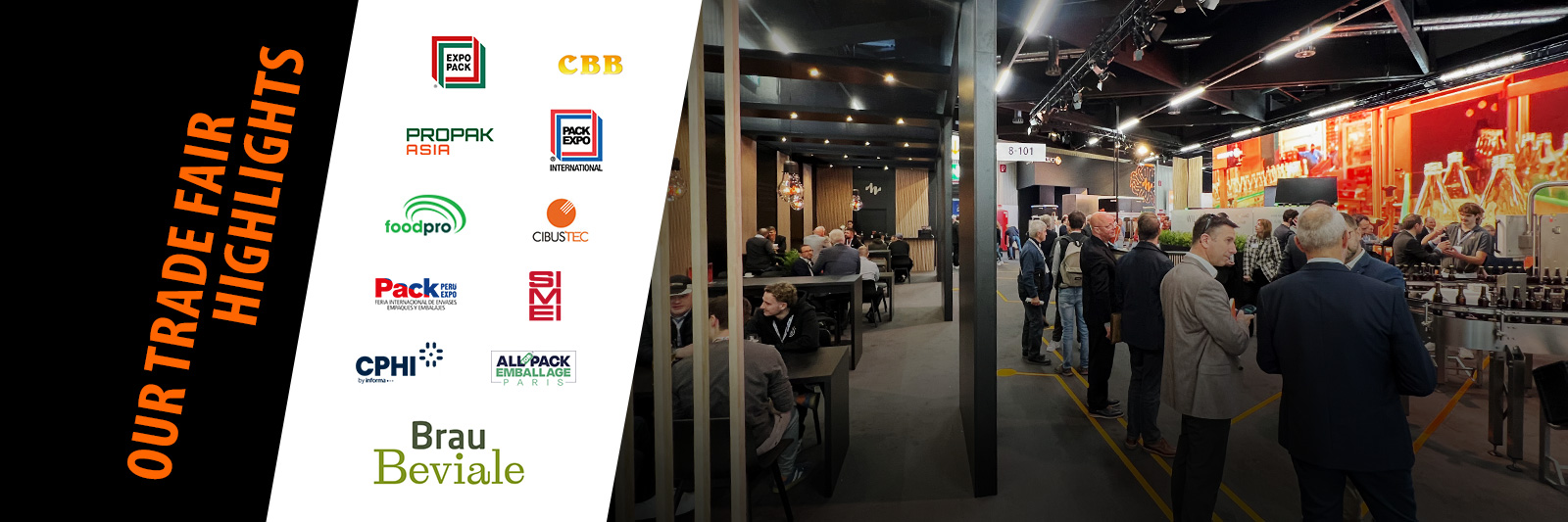
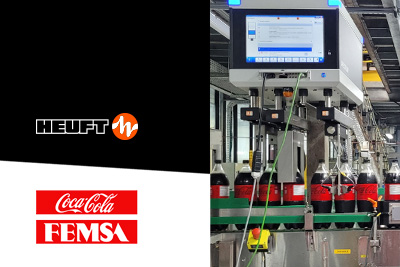
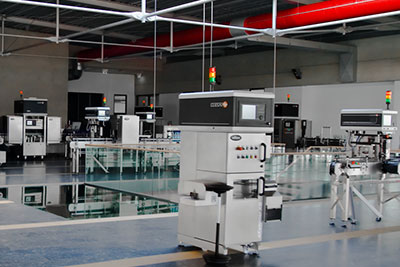
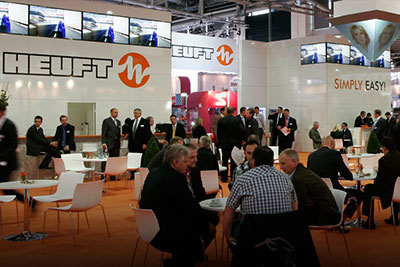
Top-class representatives from the most varied filling plants participated in the HEUFT TeKnowledge seminar about line efficiency with interest.

Top-class representatives from the most varied filling plants participated in the HEUFT TeKnowledge seminar about line efficiency with interest.

"Know your line!"

Line efficiency can be noticeably increased by means of intelligent utilisation planning, an optimised bottle transport and highly efficient tools for recording the elementary production data and statistical analysis of the complete filling process. Twenty interested representatives from breweries, mineral water companies and wineries found out about this at the HEUFT TeKnowledge seminar at the beginning of June in Burgbrohl, Germany. VLB expert Roland Pahl and specialists from HEUFT informed them about strategies for reducing costs and increasing productivity in the bottling hall.

Roland Pahl went to the heart of the matter using a case study from his everyday experience:  the Head of the Institute for Engineering and Packaging of the VLB (Versuchs- und Lehranstalt für Brauerei - Research and Educational Institute for Brewing) tested the efficiency of a filling line at a medium-sized brewery for almost sixteen hours.  The result:  the actual operating time of the line was only about nine hours after deducting non-productive times for maintenance and brand changes, downtimes due to external interference such as a lack of empties or operator errors and production stops due to internal interference such as machine breakdowns.  Although its efficiency during full production exceeded 90% its utilisation ratio, which Mr Pahl believes is far more important, was barely 60%.

Fault analysis for an optimal utilisation ratio

According to Mr Pahl such costly losses in productivity can on the one hand be avoided by consistent utilisation planning in order to optimise the utilisation ratio.  "The other principle is:  ´know your line!´.  Fault analysis has to be practised and it must always be practised."  Even minor interference to the container flow or at the machines and devices could thwart the efficiency of a line with lasting effect when considered over a period of time:  "a small fault which accumulates can be responsible for a total downtime of seven hours in a week.  This means the loss of a whole shift due to a single fault!"

Specialists from HEUFT explained to the seminar guests how to rule out downtimes in advance by means of improvements to the container transport in the bottling hall and how the status-oriented maintenance required by Mr Pahl can be accomplished with highly efficient tools for analysing the performance of a filling line.

A conveyor control system for a bottle flow without gaps

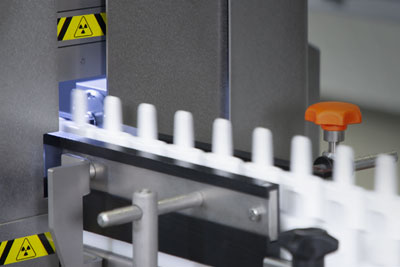
Harald Ax presented a conveyor control system which closes gaps in the bottle flow without impact pressure in order to prevent supply shortfalls to the master machines and consequently production standstills with a lasting effect:  "the HEUFT synchron keeps the number of containers at the right level.  The result is an interference-free and quiet flow".  In addition the conveyor regulation system makes it possible to limit the cost factors regarding the conveyor mechanics, wear and tear as well as maintenance and contributes to the saving of space-consuming buffer areas.  The HEUFT line-up laning, the HEUFT relax container fanning out and the HEUFT streamer container unmatching systems also increase line efficiency according to the expert for conveyor systems and line control by, among other things, effectively preventing interference at the transitions between single-lane and multi-lane transport sections due to wedged bottles or containers which have fallen over.

Intelligent conveyor drive for maximum energy efficiency

According to Mr Ax further possible savings can be achieved by using the newly developed HEUFT beetec an intelligent servo direct drive for conveyors which manages completely without gears.  This minimises energy loss because of waste heat and friction so that an energy efficiency of 86% is achieved during nominal operation.  This produces a saving of over 30% compared with the typical value for a three-phase AC motor with frequency converter and bevel gearing.  The power factor correction brings about an additional savings effect.  It increases the proportion of active current in relation to apparent current to 91% during nominal output - completely without the costly use of a passive mains filter.  This reduces energy costs considerably.  Additional special features, such as the closed lifetime lubrication in the hermetically sealed casing of the HEUFT beetec, reduce maintenance and consequently the downtimes of the intelligent drive system.  The new solution was met with great interest by Mr Pahl and the seminar guests because of these advantages.

Production data acquisition for performance analysis

Last minute maintenance in the form of unprepared repairs is not sufficient after the horse has bolted in order to ensure highest line efficiency.  Status-oriented maintenance using a sound control and analysis network which makes short-term intervention possible, before actual damage occurs, as recommended by Mr Pahl, can be optimally achieved with the HEUFT PROFILER.  The tool for production data acquisition (PDA) which Dr Thomas Jahnen presented records the production counters, measured and consumption values as well as downtimes of all the connected machines.  Thus it makes the performance analysis of a complete filling line possible and also provides, among other things, the OEE figures for the overall equipment effectiveness.  The information which has been acquired is automatically saved to an SQL database, evaluated and displayed in specially prepared web-based graphics and PDF reports.  Interference sources can be specifically uncovered on the basis of this data in order to be able to carry out the corresponding optimisation measures.  The PDA system also checks whether these have led to the desired success using a before and after comparison.

Fill management for detecting faults in time

Line efficiency can also be considerably increased using fill management functions such as those provided by the HEUFT VX.  Product Manager Martina Stirner explained this during her presentation.  Diagrams demonstrate the efficiency of each individual filler valve precisely. For example in this way fill level detections from HEUFT can determine exactly which filler valve is causing the long-term costly overfilling.  Faulty valves are identified before they fail completely.  Serial faults which reduce line efficiency due to high reject rates are also detected in good time.  A precise analysis of the complete filling process is achieved with a quantifying module which automatically converts the results of the fill level measurements into the actual fill value.  The average value of the filler output can also be determined - therefore output deviations can be promptly detected and stopped.

All these solutions contribute towards finding and rectifying interference sources before production downtimes occur.  The numerous high-ranking representatives from breweries, mineral water companies and wineries who came to the HEUFT TeKnowledge seminar "Increased efficiency in the bottling hall:  reducing costs and raising productivity" were accordingly pleased with the information and utility value of the event.
Missed the seminar?  We would be pleased to answer enquiries about line efficiency personally:  expertise@heuft.com.


ricerca »


HEUFT news » HEUFT news

assistenza 24h » assistenza 24h Fate clic sul disco colorato per avere informazioni della rispettiva filiale.

report »

report
» Nuovi strumenti PDA per una maggiore efficienza e qualità
» Networking is the answer!
» The HEUFT synchron - efficiency at your fingertips


multimedia »

multimedia
» pix Know your line!Know your line! Know your line! Know your line! Know your line! Know your line! Know your line!
» pdf
HEUFT synchron
» pdf
HEUFT conveyor


profilo » profilo HEUFT SYSTEMTECHNIK GMBH è il leader tecnologico per l’assicurazione qualità nella produzione di cibi e bevande.  Oltre a innovative soluzioni di automazione per un’ispezione di qualità sostenibile...

esplorare HEUFT » esplorare HEUFT Dovete assolutamente provarlo:  il nuovo sito web HEUFT riesce a combinare utili informazioni su tutti i nostri prodotti, estrema facilità d’uso e gradevolezza d’aspetto.  Nel sito potrete trovare video...

depliant » depliant I nuovi depliant HEUFT forniscono informazioni dettagliate su tutti i nostri prodotti e servizi. Sono scaricabili qui in lingue diverse.

prodotti » prodotti
settore bevande »
» ispettore casse rese
» unità di smistamento bottiglie
» ispezione bottiglie vuote
» empty can inspection
» gestione riempitrice
» controllo contenitori pieni
» HEUFT spotter SF
» ispezione corpi estranei per cibi pastosi e liquidi
» ispezione corpi estranei per linee vetro ad alta velocità
» ispezione corpi estranei per linee vetro a perdere
» controllo perdite per contenitori plastici
» controllo perdite per contenitori in cartone
» schiumatura ad ultrasuoni
» etichettatrice
» etichettatrice per etichette autoadesive
» etichettatrice per etichette avvolgenti
» HEUFT TORNADO D
» controllo finale per i contenitori
» ispezione casse piene
» controllo casse piene
» espulsione contenitori
» espulsione casse
» sistema di controllo nastri
» trasporto contenitori
» Panoramica dei prodotti IT
settore alimentare »
» ispezione contenitori vuoti
» ispezione stampi vuoti
» gestione riempimento
» ispezione contenitori pieni
» HEUFT eXaminer XAC
» HEUFT eXaminer XT
» Controllo integrità
» controllo perdite per contenitori plastici
» macchina etichettatrice
» etichette autoadesive
» ispezione casse piene
» verifica casse piene
» sistema di controllo nastri
» Panoramica delle soluzioni IT per una produzione efficiente nel settore alimentare
settore sanitario »
» Ispezione contenitori vuoti
» full container inspection PH
» Ispezione contenitori pieni
» Ispezione completa del prodotto
» Bombolette spray - ispezione livello di riempimento e smistamento
» Controllo perdite per contenitori plastici
» Rilevamento corpi estranei
» Controllo finale del prodotto
» Ispezione dell’imballo esterno
» Espulsione dei contenitori
» Sistemi di espulsione casse