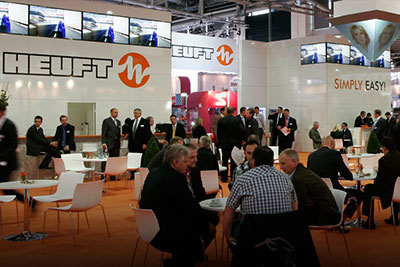
Mr Bachmeier discussed strategies for safely filling and packaging sensitive products with specialists from the whole industry.

Mr Bachmeier discussed strategies for safely filling and packaging sensitive products with specialists from the whole industry.

Leakage check: not an option but a must

Those who wish to achieve the greatest possible sterility when filling microbiologically sensitive products have to ensure afterwards that the packaging has been closed correctly and remains completely leak-proof. Otherwise there is a threat of the contents going off and with that the consumer´s health is at risk despite costly investments in hygienic filling procedures. HEUFT expert Stephan Bachmeier recently presented innovative technologies, for inspecting the integrity of plastic containers which effectively prevent the recontamination of aseptically filled drinks with microorganisms, at an aseptic symposium at the Fresenius Academy.

Fruit juices, smoothies, near-water, dairy and wellness drinks are the thirst quenchers of the future.  More and more consumers are deciding in favour of healthy drinks which free of preservatives develop their pure aroma.  However these are not infrequently microbiologically particularly sensitive and require maximum hygiene during the filling and packaging process.  "Does aseptic processing guarantee the safe and economic production of drinks?" was therefore the question dealt with by over one hundred representatives from the drinks industry at the beginning of November at the 7th Fresenius symposium for aseptic drinks production in Mainz, Germany.  The subjects alternatives to cold aseptic filling and risk management during aseptic drinks production were on the programme in addition to an analysis of the international market.

The ultimate - cold aseptic filling

Cold aseptic filling - regardless of whether wet or dry - is regarded as the ultimate in sterile filling.  It has experienced an impressive boom recently and a worldwide annual increase of 5% has been predicted for the future.  The process whereby product, container and closure are separately sterilised at a normal ambient temperature and brought together under aseptic conditions does not make any special demands on the plastic containers used but on the other hand is associated with high investment costs.  Compared with that the acquisition, installation and commissioning of equipment for classic hot filling is considerably more reasonable.  However this method is at a disadvantage as regards energy efficiency as well as the material, weight, design, ability to be labelled and costs of the containers to be filled.  An alternative to this, also presented at the symposium, is a PET hot fill process which compensates the volume contraction during the cooling phase by means of a nitrogen input so that thinner walled, lighter plastic containers of different sizes with smooth label surfaces can also be hot filled.

However it is all the same which method is used:  preventing microbiological contamination is what matters as regards maximum product safety not only during the filling process.  It is just as important to check the integrity of the packaging of the freshly filled product and to reject containers with leaks.  Because otherwise there is the threat of recontamination with germs and all the effort was in vain.  The experts gathered at the Fresenius symposium also confirmed this.  In his talk Stephan Bachmeier, product manager for leakage checks at HEUFT SYSTEMTECHNIK GMBH, presented inline quality checks for plastic containers with which risky closure faults and leaks can be precisely identified.

Closure detection without "blind areas"

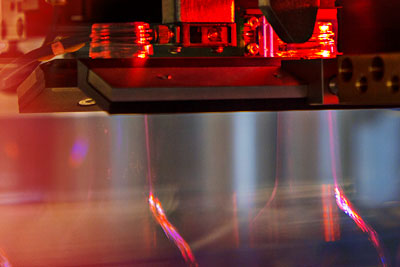
The complete presence of closures can be checked in this way using reflection light scanners or inductive sensors.  Mr Bachmeier explained:  "however modern camera systems achieve an optimal closure inspection which not only check the presence of the closure but also different closure characteristics".  The best example:  the HEUFT VISION module.  "Canted closures, damaged or trapped tamper evident rings or closure parts missing from multipart closure systems are therefore a thing of the past".  Those who wish to track down even the smallest faults reliably need a 360 degree closure inspection such as that of the new HEUFT FinalView FO.  "The system inspects the closure from different views using several cameras so that "blind areas" no longer exist" explained Mr Bachmeier.

Leakage check for PET bottles

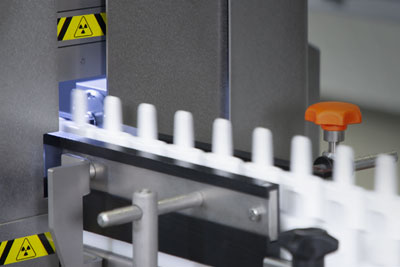
The inspection of the hygienically designed leakage checks of the HEUFT squeezer type, based on the pressure change procedure, is most suitable for precisely checking the integrity of plastic containers.  The supple bottles are flexibly deformed by a belt drive which runs synchronously with the conveyor in order to check their tightness using different measurements.  Depending on the task the spectrum ranges from "a measurement of the container resistance and a comparative fill level detection to inductive measurements in the case of containers with foil closures" according to Mr Bachmeier.  HEUFT compiles individually co-ordinated solutions depending on the customer-specific containers and requirements.  As a result stress cracks and microcracks in the sidewall, thread and sealing surface damage and even the smallest leaks which cannot be optically detected in the closure foil can be identified.  That precludes a loss of stability as regards the containers and effectively prevents the product from leaking, contamination and health risks to the consumer due to the contents of the container going off.

Therefore "leakage checks are more than just an option they are a must not only in the aseptic drinks production sector" was the conclusion of the HEUFT product manager´s talk at the Fresenius symposium.  "After all the consumer´s safety has top priority".


search »


HEUFT news » HEUFT news

service around the clock » service around the clock Please click on the circle in order to receive more information about the respective subsidiary.

reports »

reports
» Product safety relating to the filler
» HEUFT has the knack
» Leakage check for plastic containers


multimedia »

multimedia
» pix Leakage check:  not an option but a mustLeakage check: not an option but a must Leakage check:  not an option but a must Leakage check:  not an option but a must Leakage check:  not an option but a must Leakage check:  not an option but a must Leakage check:  not an option but a must Leakage check:  not an option but a must Leakage check:  not an option but a must Leakage check:  not an option but a must Leakage check:  not an option but a must Leakage check:  not an option but a must Leakage check:  not an option but a must


profile » profile HEUFT SYSTEMTECHNIK GMBH is the technological leader as regards quality assurance for the production of food, drink and healthcare products. In addition to innovative automation solutions for the sustainable quality inspection of empty...

explore HEUFT » explore HEUFT You've got to experience it: the new animated HEUFT website combines comprehensive information about all our products with top usability and maximum entertainment value. Our Internet presence provides you with videos and other multimedia...

brochures » brochures The newly published HEUFT brochures provide detailed information about all our products and services. They are available here in different languages for downloading.

product links » product links
beverage products »
» returned crate check
» bottle sorting unit
» Empty bottle inspection
» Fill management
» Full container check
» full container inspection SF
» XA foreign object inspection
» XL foreign object inspection
» XO foreign object inspection
» Leakage check for plastic containers
» Leakage check for drink cartons
» Ultrasonic fobbing
» Labelling machine
» Self-adhesive labeller
» Wrap-around labeller
» 2 in 1 labeller
» Final check for containers
» Full case inspection
» Full case check
» Container rejectors
» Case rejectors
» Conveyor control system
» Container transport
» IT overview
food products »
» Empty container inspection
» empty mould inspection
» Fill management
» Full container check
» XAC foreign object inspection
» XT foreign object inspection
» Integrity Check
» Leakage check for plastic containers
» Labelling machine
» Self-adhesive labeller
» Full case inspection
» Full case check
» Conveyor control system
» IT overview
healthcare products »
» Empty container inspection
» Outer packaging check
» Full container inspection
» full container inspection PH
» Final product check
» Full product check
» Container rejection
» Case rejection
» Leakage check for plastic containers
» Foreign object detection
» Spray cans - fill level detection and laning