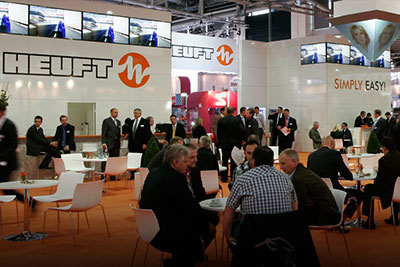
HEUFT 电话服务的职员

HEUFT 电话服务的职员

The new dimension to the TeleService

An interview with J?gen Kurz (qualified engineer), Manager of the International Procedures, Training and Customer Desk Departments.

Mrs Pfaff: Mr Kurz can you explain what the HEUFT TeleService is?

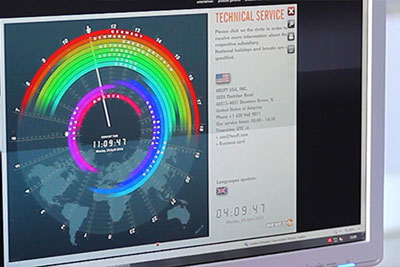
Mr Kurz: The HEUFT TeleService makes it possible to access devices from the HEUFT TX series via the Internet. The integrated extensive analysis of information which a technician would carry out on-site in the case of a fault can be viewed from far away by means of this connection. In this way, for example, the technician in Burgbrohl is "standing" next to the line in the Caribbean without being on-site. The technical management takes over the HEUFT server which connects the customer via a central point to the location where at that time his enquiry can receive the best possible quality of service. Security was another aspect which was important to us. The security architecture installed rules out the possibility of access being gained to the customer´s own network via this connection.

Mrs Pfaff: What is the purpose of this service?

Mr Kurz: The TeleService is designed to analyse faults at the customer´s regardless of the distance. These can frequently be quickly remedied together with the technical personnel on-site. This reduces downtimes enormously. The information collected is an optimum help in preparing a service visit if a fault cannot be rectified in this way. It can also be used, for example, to determine the necessity for maintenance work or to carry out program updating.

Mrs Pfaff: How does the new HEUFT TeleService work?

Mr Kurz: The customer logs on to a HEUFT device using his customer-related identification and selects the TeleService procedure. The signal triggered by this procedure is distributed to all mobile and permanently installed TeleService terminals which are on-line at that point in time. With a flexible, adaptive control system it can be established from which of the currently connected terminals the customer can best receive assistance. The technician at this terminal immediately starts to analyse the device status. He analyses diagrams, functions, readings etc. At the same time it is possible to chat with the customer. The technician sends a pre-formulated message, the customer reads it and answers the question. This interchange takes place in the language of the respective participants. The text is translated on its way between the technician and the customer making actual multilingual global communication possible. Information which the technician cannot obtain from the device can be ascertained within the context of these chats e.g. information regarding the device environment or the bottle flow. As a rule the cause of every fault can be clearly analysed using this information. The customer can be given tangible recommendations for remedying faults. A typical example is the soiling of optical components. The technician can quickly spot the remains of a label in the sidewall detection of an empty bottle inspector from the pictures transmitted. The customer can then be given a precise explanation of how to clean the detection module.

Mrs Pfaff: What are the special advantages of this system when compared with other remote service systems?

Mr Kurz: Its particular advantage is the worldwide distribution of the service terminals in conjunction with multilingual communication. In this way fast and competent assistance is available day and night throughout the world. Another important plus point is the possibility to access the complete device. We can actually look into the device by means of this system and carry out the same analyses to the device from far away as the technician can on-site. The only difference is, for example, that the customer has to describe the environmental conditions to us and he has to put the test bottles into place. The advantage for the customer is of course the enormous potential savings. Travelling costs, stand times and downtimes are reduced. If he has a problem he has access to immediate qualified assistance. He does not have to describe everything to the technician, the technician analyses the condition of the device himself. In addition the customer can request regular inspections of the device in order to analyse the necessity for maintenance work. Priority will always be given to the high availability of the system which ensures a fast return flow of the investment costs for the installation of the HEUFT TeleService connection.

Mrs Pfaff: Thank you for this interview.


搜索 »


HEUFT news » HEUFT news

service around the clock » service around the clock Please click on the circle in order to receive more information about the respective subsidiary.

多媒体 »

多媒体
» pix  TeleService的新尺寸 TeleService的新尺寸  TeleService的新尺寸  TeleService的新尺寸


档案 » 档案 HEUFT SYSTEMTECHNIK GMBH是食品和饮料产品质量保证的技术领导者。除了创新的空瓶和满瓶可持续质量检测的自动控制解决方案之外,产品范围也包括高性能贴标机,容器友好传输,分类和剔除系统还有增加生产线效率的高效软件。...

探索HEUFT » 探索HEUFT 你必须经历:新的栩栩如生的HEUFT网站把关于我们所有产品的综合信息与顶级使用性和最大娱乐价值相结合。我们的因特网为你提供了视频和其他多媒体内容,除了设备和服务的详细信息外,还说明了HEUFT研发的杰出性能,令人印象深刻[需要Flash]。...

小册子 » 小册子 最新印刷的HEUFT小册子提供所有关于我们的产品和服务的详细信息。这里有许多种语言版本可以下载

产品链接 » 产品链接
饮料产品 »
» 返箱检测
» 瓶子分类
» 空瓶检测
» empty can inspection
» 灌装管理
» 满瓶检测
» 服务
» 异物检测XA
» 异物检测 XL
» 异物检测 XO
» 塑料容器泄漏检测
» 饮料纸盒的泄漏检查
» 超声波击泡
» 贴标机
» 自粘商标
» 缠绕贴标机
» 容器最终检查
» 满箱检测
» 满箱检查
» 容器剔除
» 箱子剔除
» 输送带控制系统
» 容器传送
» IT 概述
食品产品 »
» 空容器检测
» 空模检测
» 灌装管理
» 满瓶检测
» XAC 异物检测
» XT 异物检测
» 全面检测
» 朦犸椠骥鸸猢检测
» 贴标机
» 自粘商标
» 满箱检测
» 满箱检查
» 赇腠带盔鲦锏沓
» IT 概述
保健产品 »
» 空容器检测
» 满瓶检测 PH
» 满箱检测
» 满瓶检测
» 喷雾罐-液面检测和分道
» 针对塑料容器的漏气检测
» 异物检测
» 最终产品检查
» 外部包装检测
» Container rejection
» 箱子剔除