有薄雾的-瓶子的刮伤检测可以使用HEUFT新技术

有薄雾的-瓶子的刮伤检测可以使用HEUFT新技术

The HEUFT development team makes a breakthrough

- the detection of scuffing on misted-up PET bottles

A reliable method of inspecting scuffing on misted-up PET bottles was not possible in the past - this has changed with the latest HEUFT technology. Imagine the following situation in a supermarket: there are bottles neatly lined up on a shelf. There are bottles on the right, brand "A", with insignificant scuffing and bottles on the left, brand "B", some with and some without scuffing. We assume that to begin with the customers help themselves equally to both products. After a certain period of time approximately the same number of bottles from both products have been removed. In contrast to brand "A" where the overall appearance has hardly changed except for a few missing bottles, amongst brand "B" on the left there are practically only unattractive containers with scuffing marks remaining due to the fact that the customers have unintentionally taken the "best looking" bottles first. From this point onwards the customer´s pattern of behaviour will change decisively. Customers who previously chose brand "B" will tend to change to brand "A" with increasing frequency due to its appearance. This can result in brand "B" losing these customers in the long run.

A high-quality scuffing inspection is necessary in order to prevent this happening so that unattractive bottles do not come on the market.

The methods available for the detection of scuffing are either based on optical absorption (bright field detection) or optical deflection (dark field detection). However the evaluation of the scuffing inspection can be influenced to a great extent by ambient conditions in both these cases. The formation of drops and condensation on the bottles are at the top of the list. This effect is caused by the temperature differences exisiting between the final rinsing and the temperature in the hall. The occurrence of misted-up bottles can be reduced but not completely avoided by regulating these temperatures and by using an extraction system at the washing machine outfeed. Condensation on the outer surface can if necessary be removed by a surge of water. However there is no reliable method for removing condensation on the inner surface.
Furthermore the dwell time of the bottles between the outfeed of the washing machine and the scuffing inspection represents an important parameter. The longer this dwell time the greater the likelihood that the containers will become misted up. A short, constant dwell time also requires a short distance between the washing machine and the scuffing inspection as well as continuous production. For this reason a modern scuffing inspection monitors the production process (standstill detection) and depending on the dwell time adjusts the limit values accordingly either more insensitive or deactivates the detection completely for a certain period of time. All these measures can reduce the false rejection rate but they do not improve the detection of scuffing.

With the new HEUFT scuffing inspection the detection of scuffing must not be adjusted so that it is insensitive if misted-up bottles occur. Therefore a standstill detection is no longer required.

The HEUFT reflexx scuffing inspection can also identify scuffing on bottles which are misted up on the inside with a high degree of accuracy.

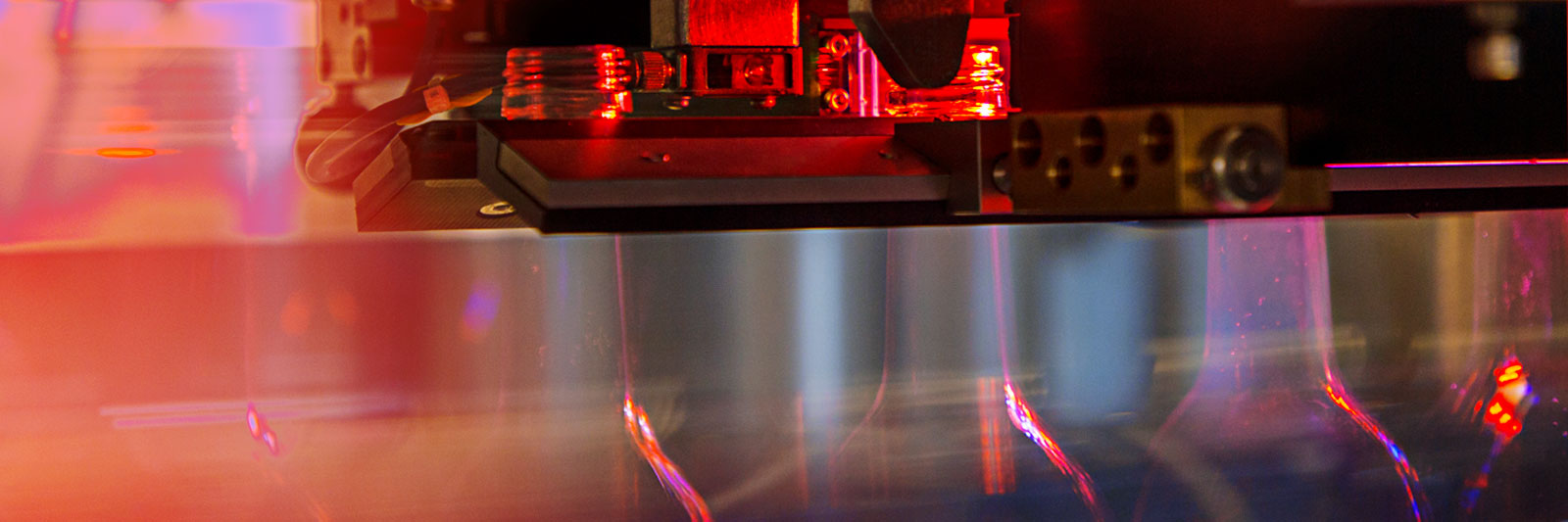
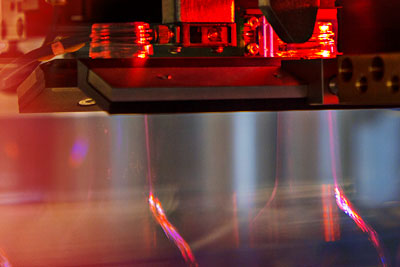
The heart of the inspection is a measuring bridge comprising an optical mirror cabinet with an image processing system. This system consists of a high-resolution camera and a fast image processor card. The image processor card is an in-house development especially optimised for the task of container inspection. The experience gained with empty bottle inspectors, sorting units and case checks over a period of more than 10 years was implemented in the development of the card design. This image processor card has already proved to be worthwhile over the past two years and is now used in all empty bottle detections.

During the evaluation process the differences between a misted-up bottle and a bottle with scuffing are worked out. In this way it is possible to identify scuffing on a dry as well as a misted-up bottle reliably.

When this detection is combined with a rejection rate control system the result is a highly effective tool for sorting out a bottle pool. Badly scuffed bottles are always rejected via a limit value because a customer cannot be expected to tolerate the appearance of such bottles. In addition other less scuffed bottles can be rejected by means of an adjustable percentage. The preset rejection rate of "old" bottles is not generally exceeded.
A reading can be taken relating to the distribution of the occurring bottles from the integrated histogram. The containers with severe scuffing are on the right. After a certain period of time the curve will shift more and more to the left because the worse bottles are being progressively removed. The bottle pool is constantly improving!

This method of sorting out the bottle pool prevents the above-mentioned shelf being "ignored". Quality pays off!


搜索 »


HEUFT news » HEUFT news

service around the clock » service around the clock Please click on the circle in order to receive more information about the respective subsidiary.

多媒体 »

多媒体
» pix  HEUFT 研发组做出突破 HEUFT 研发组做出突破  HEUFT 研发组做出突破  HEUFT 研发组做出突破


档案 » 档案 HEUFT SYSTEMTECHNIK GMBH是食品和饮料产品质量保证的技术领导者。除了创新的空瓶和满瓶可持续质量检测的自动控制解决方案之外,产品范围也包括高性能贴标机,容器友好传输,分类和剔除系统还有增加生产线效率的高效软件。...

探索HEUFT » 探索HEUFT 你必须经历:新的栩栩如生的HEUFT网站把关于我们所有产品的综合信息与顶级使用性和最大娱乐价值相结合。我们的因特网为你提供了视频和其他多媒体内容,除了设备和服务的详细信息外,还说明了HEUFT研发的杰出性能,令人印象深刻[需要Flash]。...

小册子 » 小册子 最新印刷的HEUFT小册子提供所有关于我们的产品和服务的详细信息。这里有许多种语言版本可以下载

产品链接 » 产品链接
饮料产品 »
» 返箱检测
» 瓶子分类
» 空瓶检测
» empty can inspection
» 灌装管理
» 满瓶检测
» 服务
» 异物检测XA
» 异物检测 XL
» 异物检测 XO
» 塑料容器泄漏检测
» 饮料纸盒的泄漏检查
» 超声波击泡
» 贴标机
» 自粘商标
» 缠绕贴标机
» 容器最终检查
» 满箱检测
» 满箱检查
» 容器剔除
» 箱子剔除
» 输送带控制系统
» 容器传送
» IT 概述
食品产品 »
» 空容器检测
» 空模检测
» 灌装管理
» 满瓶检测
» XAC 异物检测
» XT 异物检测
» 全面检测
» 朦犸椠骥鸸猢检测
» 贴标机
» 自粘商标
» 满箱检测
» 满箱检查
» 赇腠带盔鲦锏沓
» IT 概述
保健产品 »
» 空容器检测
» 满瓶检测 PH
» 满箱检测
» 满瓶检测
» 喷雾罐-液面检测和分道
» 针对塑料容器的漏气检测
» 异物检测
» 最终产品检查
» 外部包装检测
» Container rejection
» 箱子剔除