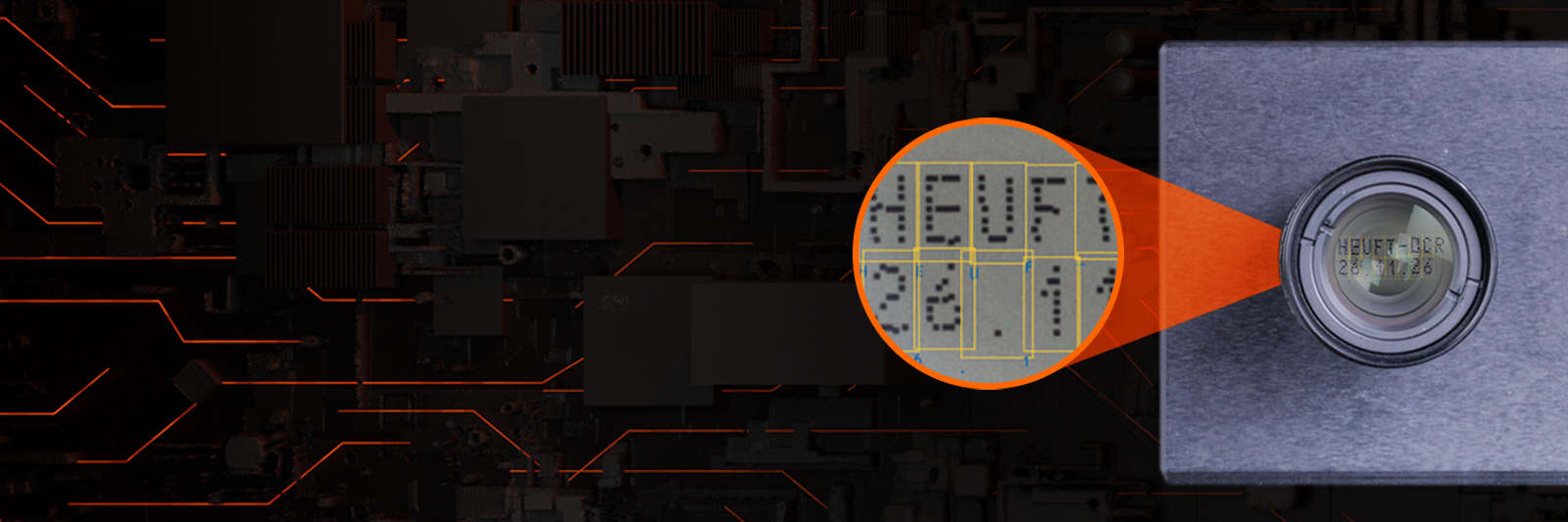
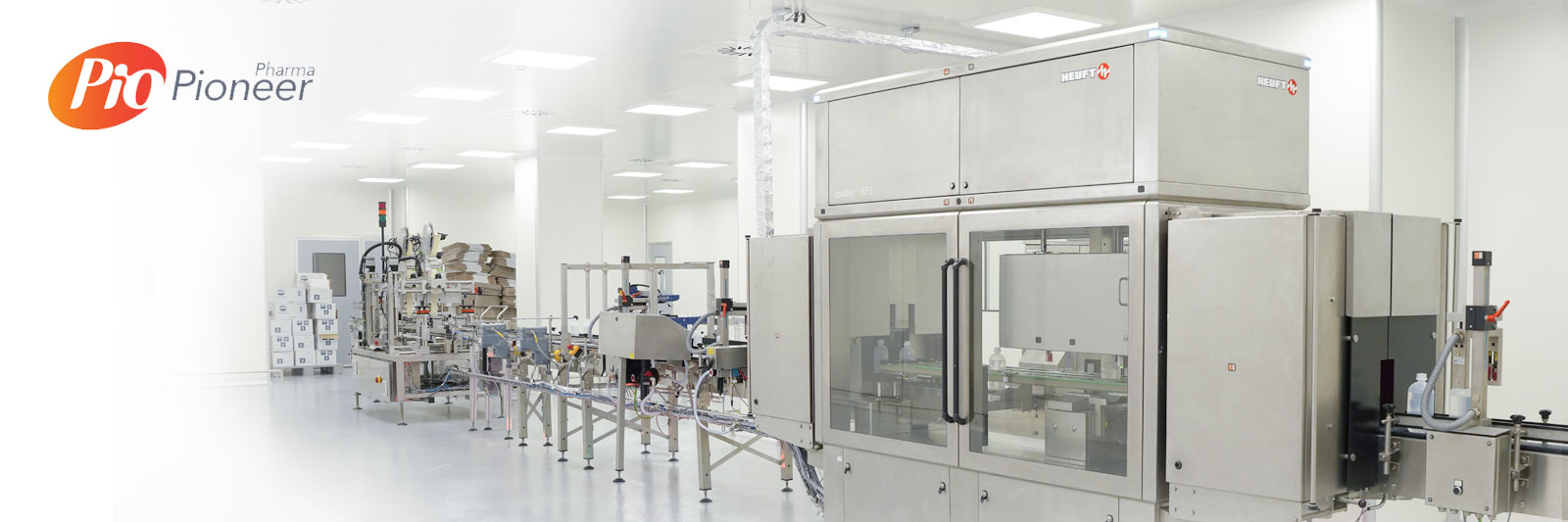
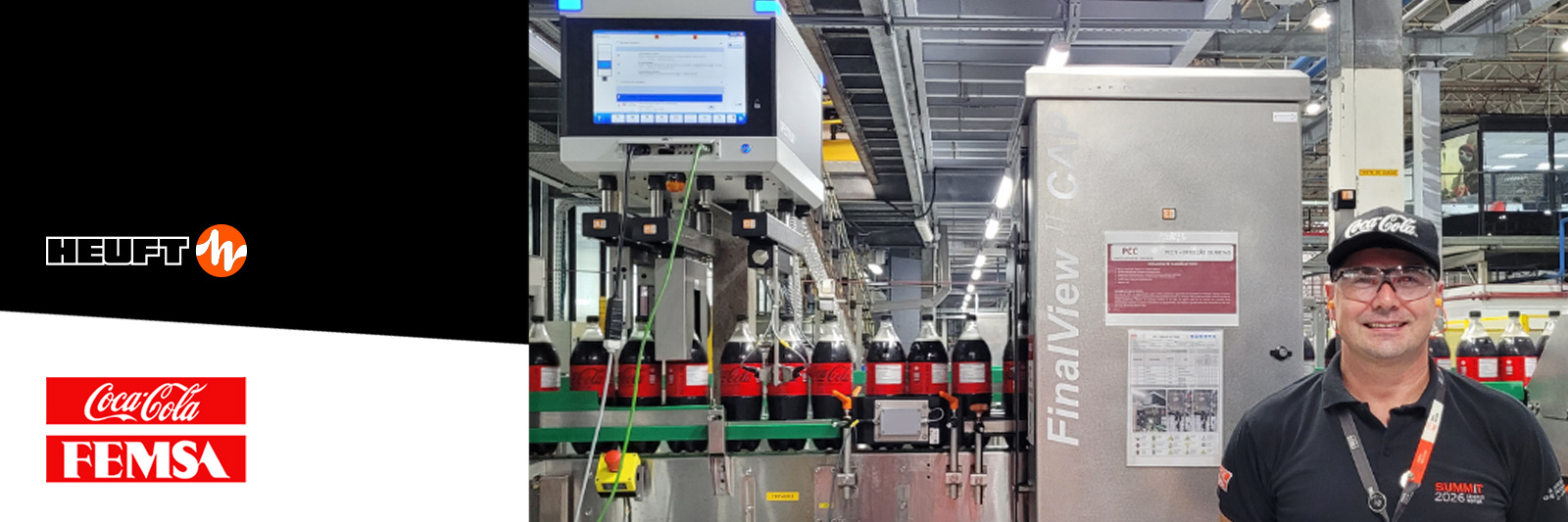
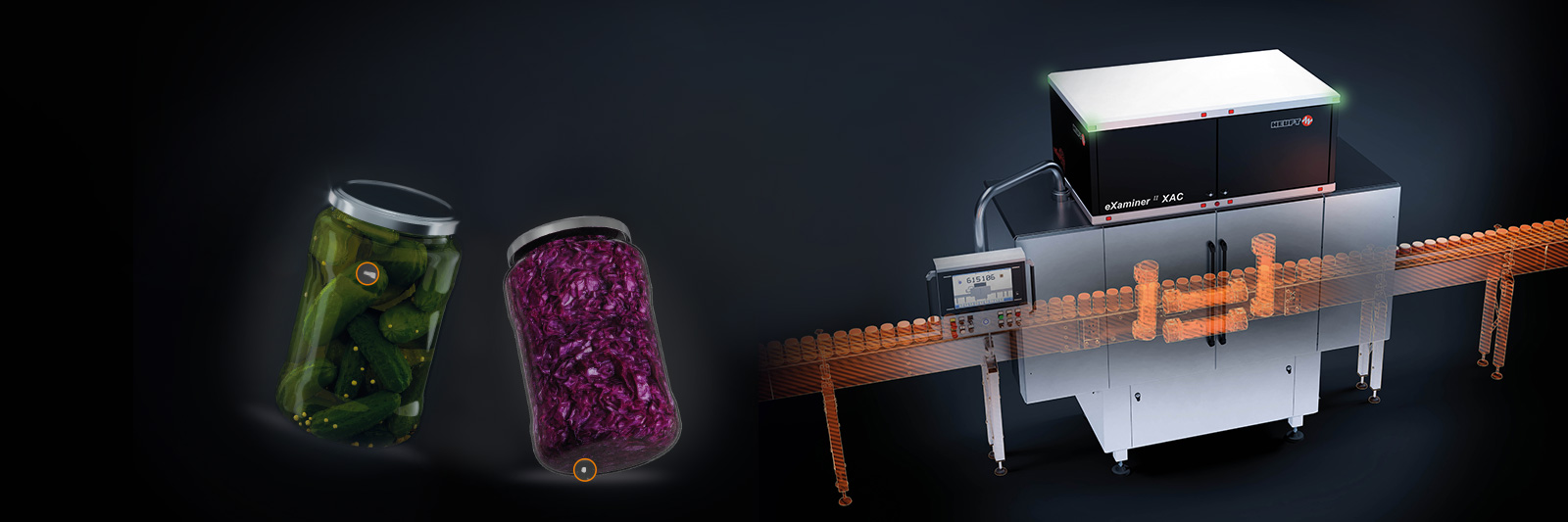
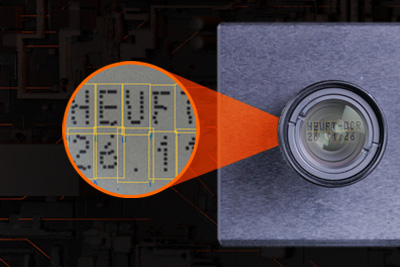
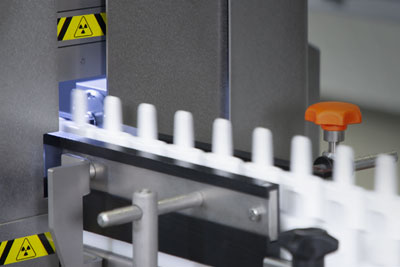
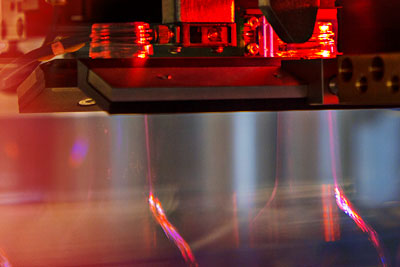
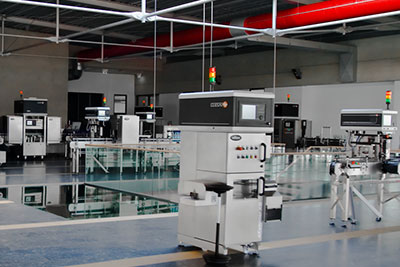
The FinalView before the first impressionInspecting the finished product with the HEUFT FinalView check device ensures that even the producer´s most exacting requirements are met and he is protected from loss of image as regards the consumer. The FinalView device ensures that the product undergoes an extensive check. In addition to a complete inspection of the label the device can check the closure, the filled products and the container. This is important because the customer´s first impression is a crucial factor when buying a product. The heart of the inspection is a measuring bridge consisting of an optical mirror cabinet with several image processing systems. Each system consists of a high-resolution camera and a fast processor card. The processor card is an in-house development especially optimised for the task of inspecting containers. This development is based on over ten years´ experience in the field of empty bottle inspectors, sorting systems and case checks and this has been realized in the design of the card. The container passes through the measuring bridge whilst on the conveyor. Pictures are taken from four angles each staggered by 90°. The pictures are then put together into a two-dimensional developed view. The result can be compared to a photocopy of a bottle which has been rolled synchronously. This method of putting together the views in real time at a container speed of 72,000 containers per hour is unique. However the views are not just put together in purely geometrical terms but their contents are compared with another in the overlapping areas and brought together as one picture. Therefore a precise bottle guidance is not necessary and variations among the bottles are more likely to be accepted. The label inspection is an integral part of the HEUFT FinalView check device. Not only the presence of a label can be subjected to an absolute and relative check but also its positioning. Containers with labels which are folded or not straight can be just as reliably identified as those which are not within the permissible variation e.g. they have not been correctly applied as regards their height or distance from other labels. Another very important inspection concerns the presence of the best-before date and the barcode. These generally filigree elements can be checked in an enlarged section of a picture where a fourfold picture resolution makes it possible to identify smaller details. The areas are only enlarged where a higher resolution is required and therefore the resources of the image processing systems can be used to their best effect. The model for this skilful technique is the human eye. Admittedly a large field of vision is pictured but for optimum recognition small areas can be checked with a higher resolution. The resolution increases considerably towards the centre of vision. When reading a book only a few letters are ever shown in high-resolution. In the corner of one´s eye a rough image is sufficient. Another important area of inspection before the product leaves the factory is the closure. Ensuring that no "old" caps are in the reservoir and the closer supply is a widespread problem in a bottling plant after a brand change as in a closure production plant when producing caps for different customers. A new type of image processing system takes a picture of each closure. This picture is centred, "unfolded" around its mid-point and transformed into a rectangular field. At first glance this new method has few similarities with the original but it is extremely well-suited for a further fast and effective evaluation. When comparing the subsequent evaluation with sample pictures taken previously, misprints as well as "false" closures can be identified. In the case of aluminium screw closures the closure seal below the lower edge can be checked. The closure can also be checked to ensure that it has been correctly rolled-on. This check is particularly important in order to guarantee that the product is perfect up until its best-before date. Besides which there is a real risk of injury (cuts) due to a tamper evidence ring which has been incorrectly rolled-on or which has protruding parts. Closure faults can also be allocated to a certain closer head with the locator function. In this way it is possible to identify and deal with production faults at an early stage. Various other inspections are available with the HEUFT FinalView. A scuffing detection can be carried out parallel to the inspection of the labels using the same components. Other types of packages can be inspected in different ways. Thanks to the modular system, camera inspections can be combined with other modules i.e. X-ray fill-level checks. A combination of the appropriate checks ensures that only a top quality and properly "dressed" product leaves the production line. |
搜索 »HEUFT news »
service around the clock »
Please click on the circle in order to receive more information about the respective subsidiary.多媒体 »
|
档案 »
HEUFT SYSTEMTECHNIK GMBH是食品和饮料产品质量保证的技术领导者。除了创新的空瓶和满瓶可持续质量检测的自动控制解决方案之外,产品范围也包括高性能贴标机,容器友好传输,分类和剔除系统还有增加生产线效率的高效软件。...探索HEUFT »
你必须经历:新的栩栩如生的HEUFT网站把关于我们所有产品的综合信息与顶级使用性和最大娱乐价值相结合。我们的因特网为你提供了视频和其他多媒体内容,除了设备和服务的详细信息外,还说明了HEUFT研发的杰出性能,令人印象深刻[需要Flash]。...小册子 »
最新印刷的HEUFT小册子提供所有关于我们的产品和服务的详细信息。这里有许多种语言版本可以下载产品链接 »
|